Checklist for Homeowners: Key Questions Before Installing Solar in North Carolina
Considering solar energy for your home in North Carolina? You’re not alone. Many homeowners are exploring rooftop solar systems, and with good reason. However, before making a decision, it’s crucial to ask the right questions and understand the different factors involved. This checklist will guide you through the essential considerations to make an informed choice.
1. What Are Your Energy Needs?
Understanding your energy consumption is the first step in evaluating whether solar is a viable option. Review your past utility bills to determine your average monthly electricity usage. This information will help you gauge the size of the system you might need.
- Estimate Consumption: Calculate your monthly kilowatt-hours (kWh) usage by averaging your last 12 months of bills.
- Future Needs: Consider any changes in your lifestyle that may affect energy consumption, such as adding appliances or planning to work from home more.
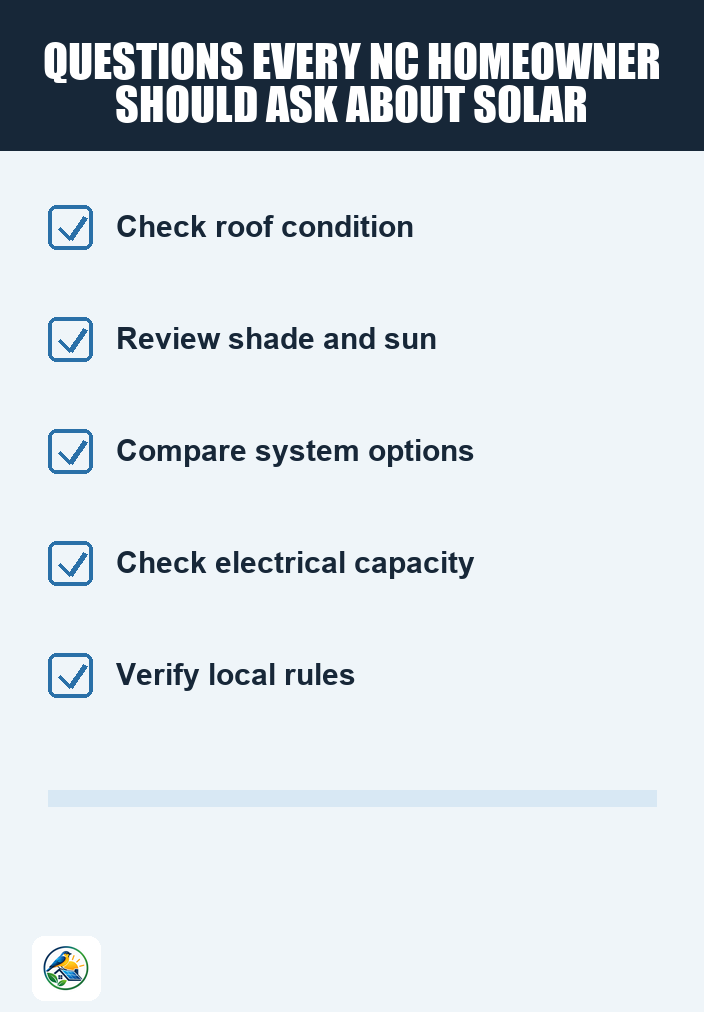
2. Is Your Roof Suitable for Solar Panels?
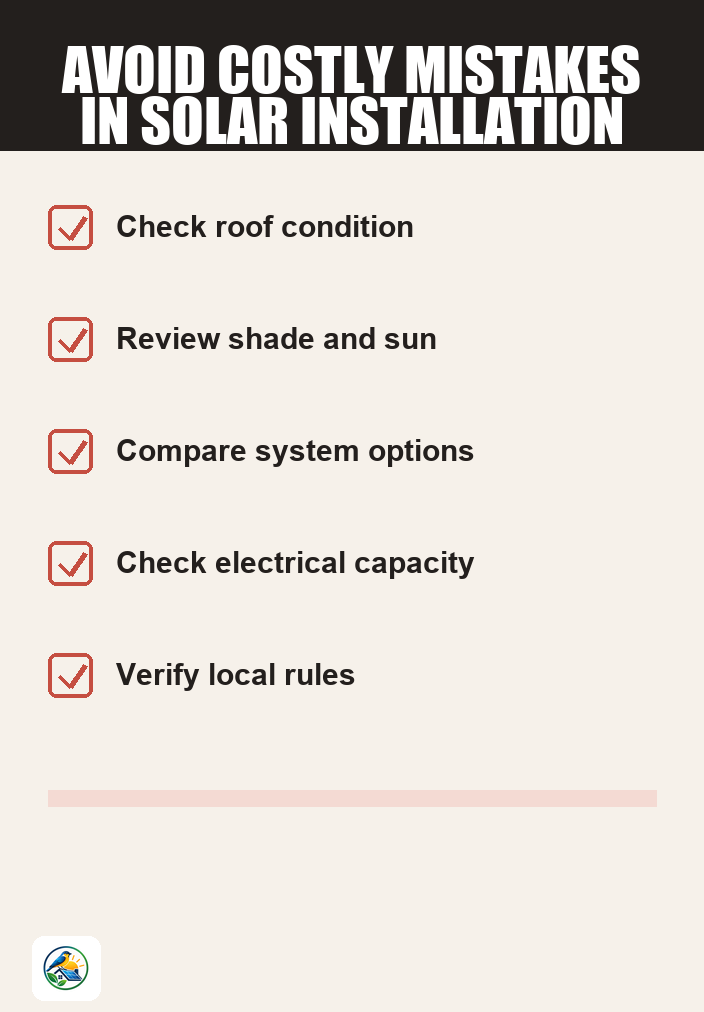
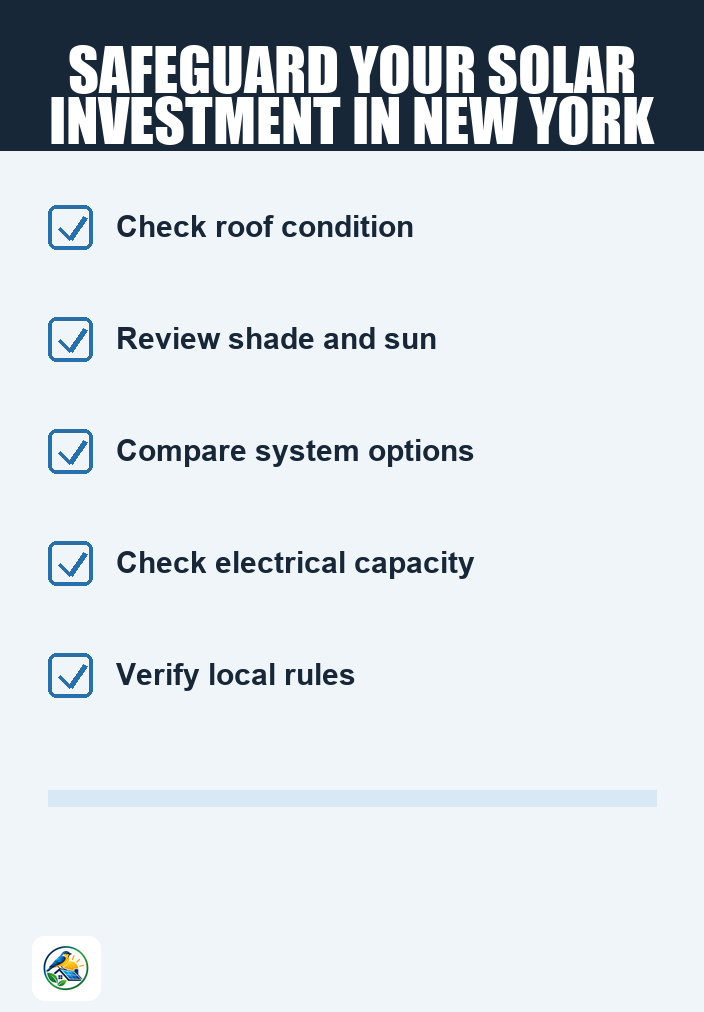
Your roof condition and orientation will significantly impact the effectiveness of a solar installation. Here are some factors to evaluate:
- Roof Condition: Ensure your roof is in good repair. If it needs replacement, consider doing that before installing solar.
- Orientation: South-facing roofs typically receive the most sunlight, but east and west can also work.
- Shade: Assess if nearby trees or buildings cast shade on your roof, as this can reduce solar efficiency.
- Space: Make sure there’s enough unobstructed space for solar panels.
3. What Type of Solar System Do You Want?
There are several types of solar setups, and understanding the differences will help you choose the right one:
- Grid-Tied Systems: These systems are connected to the utility grid and can offset your energy usage. They do not provide backup power during outages.
- Battery Backup Systems: These systems store excess energy for use during outages or at night, offering more energy independence.
- Off-Grid Systems: These systems are not connected to the grid and require a larger battery storage capacity. They are less common for residential use due to higher costs and complexity.
4. What Are the Local Incentives and Regulations?
North Carolina offers various incentives that can affect your decision, but these can change over time. Check the following:
- State Incentives: Research state-specific tax credits and rebates that may be available for solar installations.
- Utility Policies: Understand your local utility’s rules regarding net metering, which allows you to sell excess energy back to the grid.
- Permitting Requirements: Determine what permits are needed for installation and how long the process may take.
5. Have You Compared Quotes from Multiple Installers?
Getting multiple quotes is essential for making an informed decision. When comparing quotes, consider the following:
- Itemized Breakdown: Ensure each quote provides a detailed breakdown of costs, including equipment, installation, permits, and any additional fees.
- Warranties: Check the warranties offered for the panels and installation to understand long-term support.
- Experience and Reviews: Research the installer’s reputation, experience, and customer reviews to gauge their reliability.
6. What Financing Options Are Available?
Solar installations can be a significant investment. Understanding your financing options will help you manage costs:
- Cash Purchase: Pay upfront for the system, which can maximize savings long-term.
- Solar Loans: Consider financing options that allow you to pay over time while still benefiting from incentives.
- Leases and PPAs: Explore leasing options or Power Purchase Agreements (PPAs), but understand how these may affect ownership and savings.
7. What Maintenance Will Be Required?
While solar panels are generally low-maintenance, some upkeep is necessary:
- Cleaning: Regular cleaning may be needed to remove debris or dirt, especially in areas with heavy pollen or dust.
- Inspections: Schedule periodic inspections to ensure the system operates efficiently and safely.
- Monitoring: Utilize monitoring systems to track energy production and identify any issues quickly.
8. What Are Your Future Plans?
Consider how long you plan to stay in your current home and how solar fits into your long-term goals:
- Longevity: If you plan to move soon, weigh the potential benefits versus the costs of installation.
- Home Improvements: If you anticipate major renovations, consider how they may impact your solar system.
Next Steps for Homeowners
Installing solar panels can be a rewarding decision, but it requires careful consideration. Begin by answering the questions outlined in this checklist to determine if solar is right for you. Next, seek itemized quotes from qualified installers to compare options and make an informed decision. Always verify current local utility, installer, government, or tax information to ensure you have the most accurate and relevant data.